

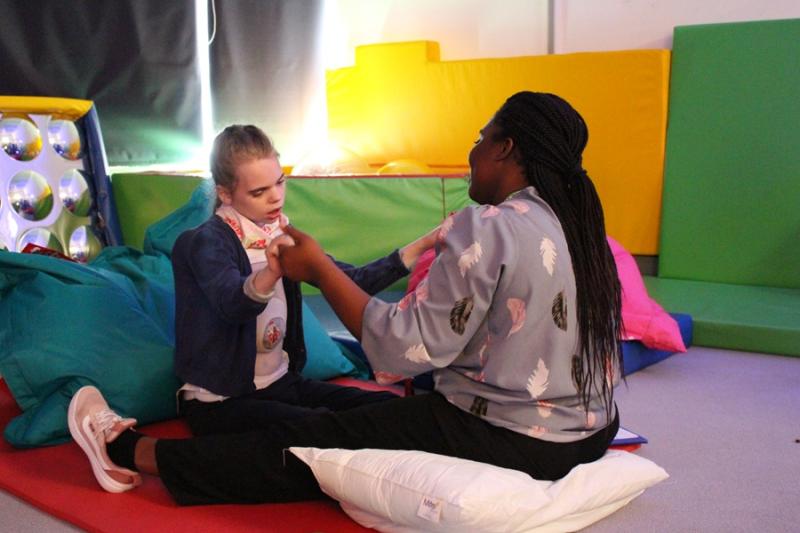
This Deafblind Awareness Week, we celebrate the unique ways our students experience the world and the power of inclusive and collaborative support.
Deafblindness is a condition characterised by combined vision and hearing loss that affects a person's ability to communicate, move around independently and access information. At Treloar's:
- 37% of students have a visual impairment
- 60% of students are non-verbal or require support from communication aids
This means that in our community we have students who have physical disabilities and experience Multi-Sensory Impairment (Deafblind). This creates challenges with utilising both their hearing and vision functionally.
Students who are deafblind experience the world in a different way. They benefit from a multi-sensory approach with a focus on touch, movement and the use of other senses to understand the world around them and make sense of what is happening around them in their immediate environment.
Reducing barriers faced by deafblind students at Treloar's
We work together as a Multi-Disciplinary Team (MDT). Our team may include:
- Teachers
- Teaching assistants
- Speech and language therapists
- Physiotherapists
- Occupational therapists
- Vision and hearing specialists
- Families and carers
To reduce barriers faced by deafblind students, we think holistically. We assess:
- How the student moves (both gross and fine motor ability)
- How they communicate
- How they feel emotionally
- How they learn best
- How they understand the world
We use a range of creative strategies to support them, including:
- On-body signing: Staff sign on the child’s body so they can 'feel' the message.
- Objects of reference: Real objects help students understand meaning.
- Tactile symbols: Raised or textured symbols represent activities, places, or people.
- Scent cues: Smells can enable students to recognise environments—like a particular scent for lunchtime or therapy sessions.
- Vibration and movement: Some students respond to vibrations or gentle movement to gain awareness of their surroundings.
- Consistent routines: Predictable routines help children feel secure and understand what is coming next.
Our goal is to help every student become more aware of the world around them. We do this by:
- Creating meaningful sensory experiences
- Encouraging communication in all forms
- Building trusting relationships
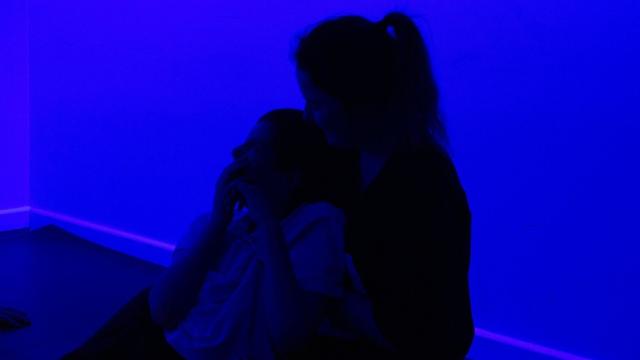
The power of atmospherics sessions
Treloar's students enjoy atmospherics sessions—a carefully curated environment that uses light, sound and scent to create a calming and therapeutic space.
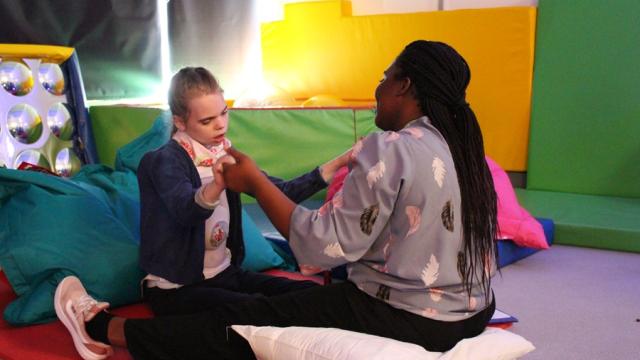
New college classrooms promote inclusive learning environment
New college classrooms have been designed with inclusion at their core.
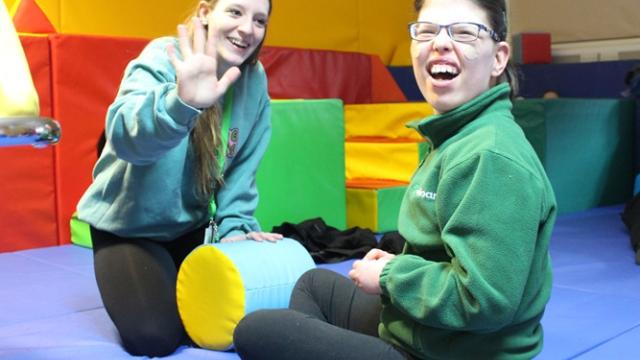
Brand new soft play room
Our new soft play room enables our students to engage in sensory activities and develop their physical skills.